
- sophiaguo@sbmsolartech.com
- Home
- product
- Energy Storage System
- Solar Lights
- Other Solar Products
- Application
- Project
- About Us
- Blog
- Contact
Post time: 2026-07-17 11:53:38
Solar street lights are often promoted as “install and forget” systems. In reality, many projects fail within months or a few years—not because solar technology is unreliable, but because of poor design, low-quality components, and unrealistic cost cutting.
If you’ve ever seen solar lights that stop working, become dim, or only last a short time after installation, this guide explains exactly why.
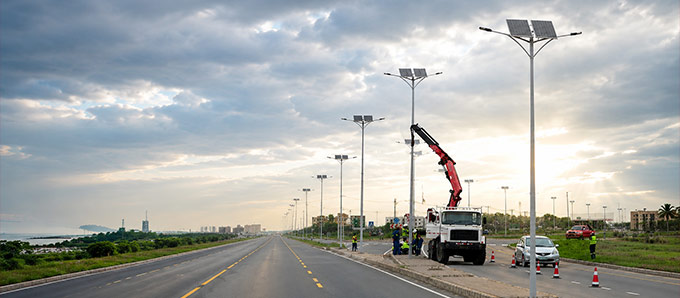
Here are the Top 10 real reasons solar street lights fail early—based on real-world engineering and field experience.
The battery is the heart of a solar street light system. When it is undersized: • Light duration drops quickly • System fails on cloudy days • Battery enters deep discharge cycles What usually goes wrong: • Battery capacity is reduced to cut cost • No 3–5 days backup design • Over-promised runtime (e.g., “12 hours full night” without real storage) A weak battery means even a strong solar panel cannot save the system.
Not all lithium batteries are equal. Cheap systems often use: • Recycled cells • Inconsistent battery packs • Poor internal welding or assembly Result: • Rapid capacity degradation • Swelling or overheating • Early total failure within 6–18 months
One of the most common problems in the solar lighting market. Examples: • “100W” lights that consume only 30–40W actual power • Overstated lumen claims • Misleading battery capacity labels Result: • Lighting is weaker than expected • Runtime is unstable •Project performance fails acceptance tests
Outdoor lighting must survive: • Heavy rain • Humidity • Dust storms Cheap products often fail due to: • Weak sealing structure • Low-grade rubber gaskets • Poor assembly quality • Once water enters: • Controller and battery damage is usually irreversible.
Low-quality solar panels lead to: • Slow charging • Poor performance on cloudy days • Incomplete battery charging cycles Hidden issue: Panels may work fine initially, but degrade faster in harsh climates.
Heat is one of the biggest silent killers of solar street lights. Common design mistakes: • Battery placed next to LED heat source • Plastic housing without heat dissipation • No thermal separation inside system Result: • Battery aging accelerates • LED lumen drops • System lifespan shortens dramatically
The controller is the “brain” of the system. Low-cost systems often use basic PWM controllers: • Lower charging efficiency • Poor performance in cloudy weather • Less battery protection Result: • Battery never fully charges • Lighting becomes unstable over time
Many failures happen because components are not properly matched. Examples: • High watt LED + small battery • Large spacing + low output light • Weak panel + high energy demand Solar lighting is a system—not individual parts.
Even a good product will fail if installation design is wrong. Common issues: • Poles placed too far apart • No lighting simulation (lux design) • Ignoring road width and height ratios Result: • Dark zones between lights • Unsafe road conditions • Project rejection or complaints
Many low-cost products skip critical tests: • Aging test (burn-in test) • Waterproof pressure test • High/low temperature cycling • Battery capacity verification Result: Defective units are shipped directly to projects, leading to: Early random failures after installation
Most solar street light failures are not caused by solar technology itself. They are caused by: • Cost-driven design decisions • Lack of engineering balance • Missing quality control • Unrealistic performance claims
A reliable solar street light system should include: • Properly sized LiFePO₄ battery (3–5 days backup) • High-efficiency monocrystalline solar panel • MPPT intelligent controller • Aluminum heat-dissipation housing • Real waterproof (IP65–IP67) structure • Engineered lighting design (not guesswork) • Factory aging & testing before shipment
Solar street lights are highly reliable—but only when properly engineered. Early failure is almost always a design or quality issue, not a solar energy limitation. For real projects (roads, highways, villages, governments), the focus should always be on system reliability, not just purchase price.
At Polybrite Solar, we focus on engineered solar lighting systems designed for long-term stability in real outdoor environments—not just specifications on paper. Our systems are built to reduce early failure risk and ensure consistent performance in demanding global projects.
How Long Do Solar Street Lights Last? A Complete Lifespan & Engineering GuidePlease fill out the form below to start chatting with the next available agent.
Start Chat
Polybrite Solar Co., Ltd.
Tel/Whatsapp: +0086 13611691077
Email: sophiaguo@sbmsolartech.com
Sales Office Add: No. 1688 East Gaoke Road, Shanghai, China
Headquarter Add: Songqiao Industrial Park at northern suburbs of Yangzhou, Jiangsu Province, China
PolyBrite Site: International | Indonesian