
- sophiaguo@sbmsolartech.com
- Home
- product
- Energy Storage System
- Solar Lights
- Other Solar Products
- Application
- Project
- About Us
- Blog
- Contact
Post time: 2026-07-02 16:16:18
As solar street lighting continues to expand across highways, rural roads, industrial zones, and smart city projects, one key question always comes up:
Should you choose an All-in-One solar street light or a Split solar street light?
Both systems work well — but they are designed for completely different lighting environments and solar conditions. In this guide, we’ll break down the real engineering differences so contractors, distributors, and project owners can choose correctly.
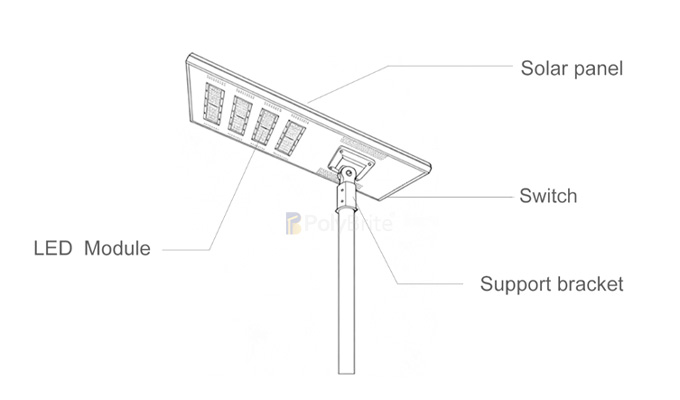
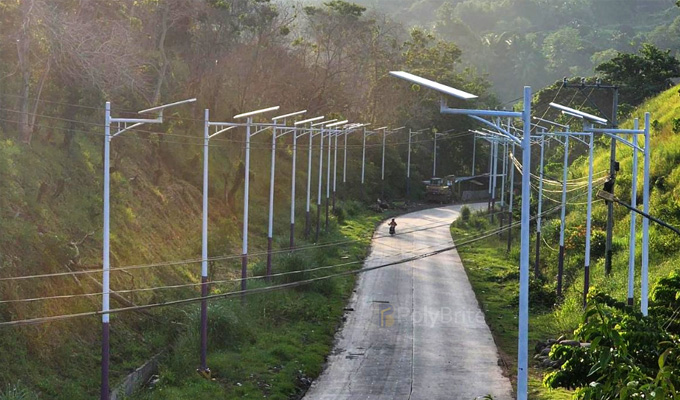
An All-in-One solar street light integrates all components into a single compact unit: • Solar panel • LED lamp head • Lithium battery • Controller (MPPT/PWM) • Motion sensor (optional) Everything is built into one housing and installed directly on the pole. Key idea: Compact, integrated, and easy to install.
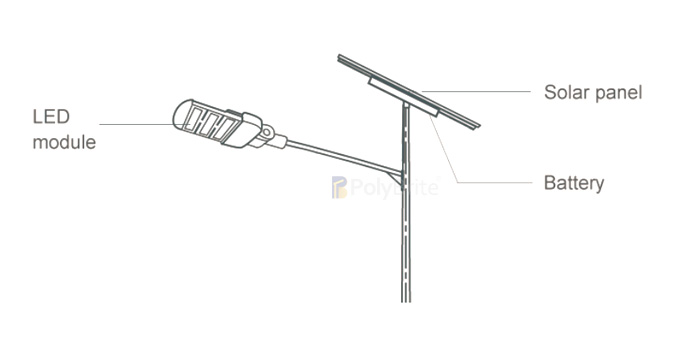
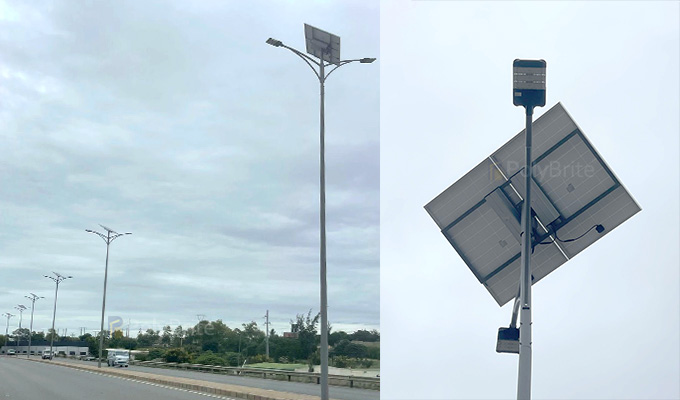
A Split solar street light separates key components: • Solar panel (independent mounting on top or side of pole) • LED lamp head • Battery (pole-mounted or underground box) • Controller system Key idea: Flexible system design with optimized solar collection.
This is the real key difference most people overlook:
☀️ Solar panel angle adjustability All-in-One Solar Street Light • Solar panel is fixed with the lamp body • Cannot freely adjust tilt or orientation • Installation angle is limited by lamp design • Performance depends heavily on sunlight conditions 👉 Result: • Best suited for high-sunlight regions • Less flexibility in low-sun or seasonal sunlight variation areas
Split Solar Street Light • Solar panel is installed independently • Can freely adjust: • Tilt angle (tilt toward sun path) • Direction (east/west/south orientation depending on hemisphere) • Optimized for local solar irradiance conditions 👉 Result: • Much higher efficiency in non-equatorial or variable sun regions • Better energy harvest throughout the year
☀️ All-in-One is better for: • Very sunny regions (high irradiation all year) • Tropical and equatorial countries • Small-scale community lighting • Fast deployment projects Typical markets: • Southeast Asia coastal areas • Middle East sunny zones • Africa equatorial regions
🌤 Split solar street light is better for: • Regions with lower or seasonal sunlight • Higher latitudes (Europe, USA, northern Asia) • Areas with winter shading or weather variation • High-performance highway or municipal lighting projects Typical markets: • Europe • United States • Northern China • Cloudy / seasonal climates
All-in-One: • Fast installation (5–15 minutes per unit) • No wiring between components • Lower labor cost
Split system: • More installation steps • Requires wiring and layout planning • Higher engineering flexibility 👉 Trade-off: • Speed vs performance optimization
All-in-One: • Usually 10W–100W (some up to 120W+) • Limited by compact structure • Best for medium lighting demand
Split system: • 60W–300W+ scalable • Larger solar panel = higher energy input • Supports 12–14 hours lighting + rainy-day backup
All-in-One: • Compact structure = less maintenance points • But when failure happens, unit replacement is common
Split system: • Components can be replaced individually • Battery can be placed in cooler location (underground or ventilated box) • Better thermal management = longer lifespan
All-in-One: • Lower upfront cost • Lower installation cost • Ideal for budget-sensitive projects
Split system: • Higher initial cost • Higher installation cost • Better long-term ROI for infrastructure projects
So which one is better? The answer depends on solar conditions + project scale, not just price. • All-in-One solar street lights → Best for sunny regions + fast installation + small/medium projects • Split solar street lights → Best for Europe/USA + variable sunlight + high-performance infrastructure projects
The biggest difference is not size or cost — it is whether the solar panel can be independently optimized to match local sunlight conditions. This single factor determines: • Energy efficiency • Battery charging reliability • Rainy-day backup performance • Long-term system stability
Solar Street Light Wattage vs Lumens: What Really Matters? Why Solar Street Light Prices Vary So Much Between Suppliers?Please fill out the form below to start chatting with the next available agent.
Start Chat
Polybrite Solar Co., Ltd.
Tel/Whatsapp: +0086 13611691077
Email: sophiaguo@sbmsolartech.com
Sales Office Add: No. 1688 East Gaoke Road, Shanghai, China
Headquarter Add: Songqiao Industrial Park at northern suburbs of Yangzhou, Jiangsu Province, China
PolyBrite Site: International | Indonesian