
- sophiaguo@sbmsolartech.com
- Home
- product
- Energy Storage System
- Solar Lights
- Other Solar Products
- Application
- Project
- About Us
- Blog
- Contact
Post time: 2026-07-09 10:23:12
Islands and off-grid regions present one of the toughest challenges for outdoor lighting. There is no stable grid power. Maintenance is expensive. Transportation is difficult. And weather conditions are often harsh and unpredictable. In these environments, traditional grid-powered lighting becomes costly and impractical. That is why solar street lights have become the preferred solution for islands and off-grid infrastructure projects worldwide. But not all solar lights are suitable for these conditions. This guide explains what really matters when designing solar street lighting for islands and remote areas.
Unlike urban cities, island and remote regions face unique constraints: • No stable electricity grid • High cost of underwater or long-distance cabling • Difficult maintenance access • Limited technical workforce locally • Harsh marine or tropical environments In many cases: Extending the power grid costs far more than installing solar lighting systems. Solar street lights solve this by providing: • Fully independent power supply • Easy installation (no trenching or cabling) • Low long-term maintenance • Scalable deployment for villages, roads, and coastal zones
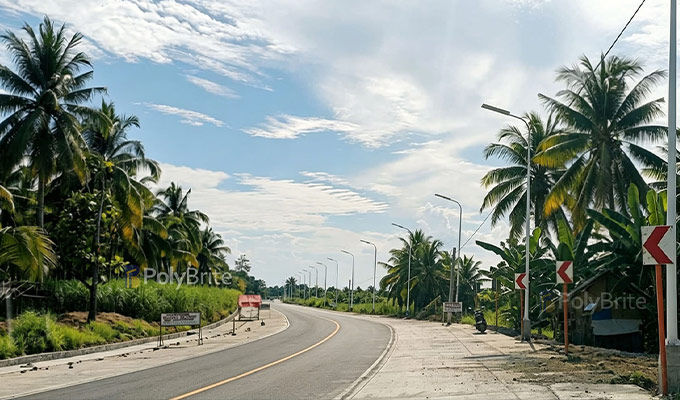
Many buyers think the main requirement is “no electricity available.” But in reality, island projects are more complex: Key challenges include: • Salt corrosion from seawater • Strong wind and typhoons • High humidity and rain cycles • Limited sunlight during rainy seasons • Logistics delays for replacement parts This means standard low-cost solar lights often fail quickly in these environments.
A reliable island/off-grid system must be designed differently from standard urban lighting. 1). High-Capacity Battery System (Critical) Off-grid systems require energy storage that can handle multiple cloudy days. Key requirements: • Lithium LiFePO₄ battery preferred • 3–5 days autonomy backup • Built-in Battery Management System (BMS) • High temperature resistance Without proper battery sizing: The light may work for a few days, then fail during rainy periods.
2). Corrosion-Resistant Design In coastal and island environments, salt is a silent destroyer. A proper system must include: • Aluminum alloy housing (anti-corrosion) • Marine-grade coating or powder coating • Stainless steel fasteners • Sealed connectors Low-quality steel components will rust quickly within months.
3). Strong Wind Resistance Pole Design Island regions often face strong winds and typhoons. Engineering requirements: • HDG (Hot-Dip Galvanized) steel poles • Reinforced pole foundation design • Wind load calculation based on local standards • Proper pole height selection Weak pole design can lead to structural failure during storms.
4). High-Efficiency Solar Panel Performance Because island weather is often unstable, efficiency matters more than size. Recommended: • Monocrystalline high-efficiency panels • Good low-light performance • Anti-PID and anti-degradation design • Proper tilt angle based on latitude
5). Smart Controller (MPPT Recommended) Off-grid systems must maximize every unit of solar energy. MPPT controllers help: • Improve charging efficiency by up to 30% • Optimize battery charging in cloudy conditions • Extend battery lifespan • Ensure stable night performance
Many failures come from poor system design, not product concept. Mistake 1: Undersized battery → Leads to early shutdown after cloudy days Mistake 2: Overestimating sunlight availability → System cannot recharge fully Mistake 3: Ignoring salt corrosion → Metal parts fail within 6–12 months Mistake 4: Using standard urban lighting design → Spacing and wattage not suitable for remote roads
Solar street lights are widely used in: • Island roads and coastal highways • Fishing villages and ports • Tourist resorts and island hotels • Remote rural communities • Military or emergency installations • Offshore facility support areas In many island projects, solar lighting is not just an option—it is the only practical solution.
A successful island lighting system follows this rule: Energy independence + environmental durability + low maintenance = long-term success This means every component must be selected with lifetime reliability in mind—not just initial price.
Island environments accelerate product failure because: • Salt air corrodes components faster • High humidity damages electronics • Cloudy weather reduces charging efficiency • Maintenance access is limited Cheap systems usually fail due to: • Weak waterproof sealing • Low-grade batteries • Poor corrosion protection • No real engineering design As a result: Many low-cost systems stop working within 3–6 months in coastal areas.
A reliable system should offer: • Proper energy storage design (multi-day autonomy) • Marine-grade corrosion protection • Wind-resistant pole engineering • MPPT intelligent charging system • Verified lumen output and photometric design • Strict factory testing and aging validation
Solar street lights are the most practical lighting solution for islands and off-grid regions—but only when properly engineered. Success in these environments depends on: • Energy reliability (battery system) • Environmental durability (corrosion + wind resistance) • Charging efficiency (MPPT + solar design) In off-grid projects, failure is not an option—because there is no backup power.
At Polybrite Solar, we specialize in engineered solar street lighting systems designed for harsh coastal, island, and remote environments worldwide. If you are planning a project, proper system design from the beginning ensures long-term stability, lower maintenance cost, and reliable night lighting performance.
What is MPPT Controller in Solar Street Light? A Simple Engineering Guide Solar Street Light Design for High Temperature Countries: Engineering Guide for Reliable Outdoor LightingPlease fill out the form below to start chatting with the next available agent.
Start Chat
Polybrite Solar Co., Ltd.
Tel/Whatsapp: +0086 13611691077
Email: sophiaguo@sbmsolartech.com
Sales Office Add: No. 1688 East Gaoke Road, Shanghai, China
Headquarter Add: Songqiao Industrial Park at northern suburbs of Yangzhou, Jiangsu Province, China
PolyBrite Site: International | Indonesian